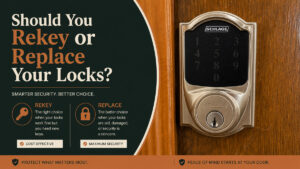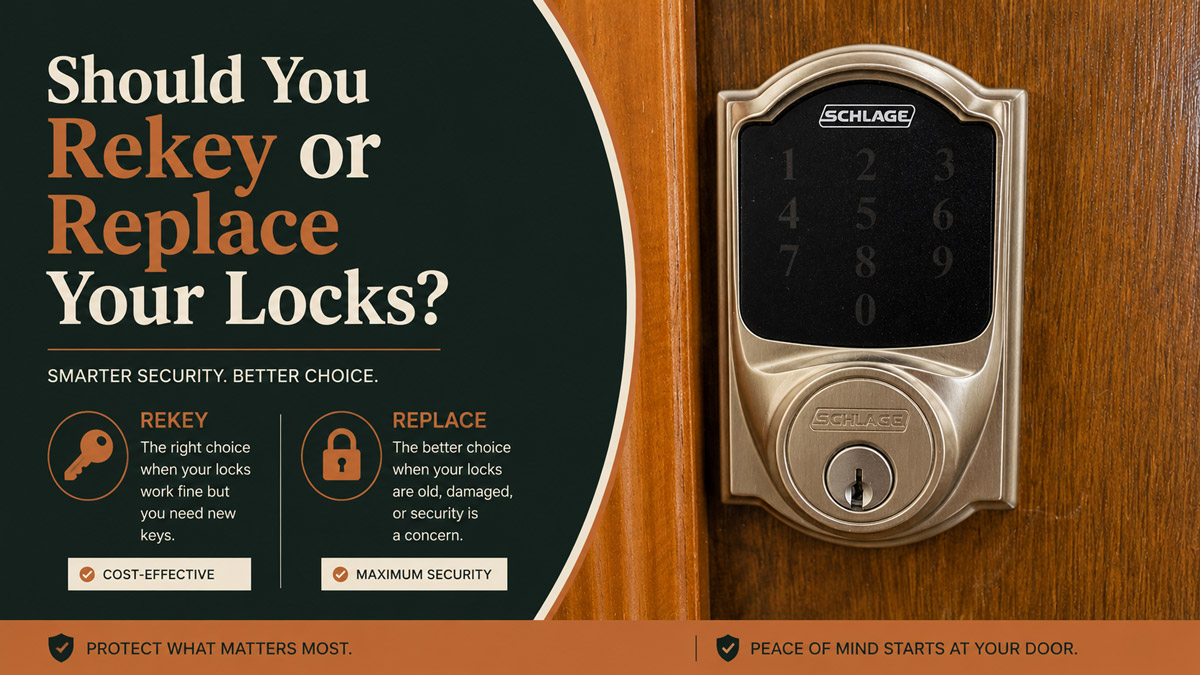
Rekeying changes the internal keying of a compatible lock so the old key no longer operates it. The exterior hardware usually remains in place. This can be useful after a move, tenant or employee change, lost key, or when several serviceable locks should operate with a coordinated key plan.
What replacement changes
Replacement removes existing hardware and installs a different lockset, deadbolt, lever, knob, keypad, or commercial device. It may be appropriate when the hardware is worn, damaged, corroded, poorly fitted, missing parts, incompatible with the door, or no longer supports the desired function or security goal.
Start with hardware condition
A smooth, properly aligned door with a serviceable lock may be a good rekeying candidate. A loose cylinder, sticking latch, damaged bolt, cracked trim, failed electronic unit, corroded mechanism, or badly misaligned door needs a broader assessment. Rekeying does not repair a failing door or frame.
Consider who may have keys
Key control is often the real issue. Think about previous owners, occupants, tenants, employees, contractors, cleaners, caregivers, and lost copies. Rekeying can invalidate old mechanical keys for compatible locks. Electronic locks may require code deletion, credential management, or device-specific reprogramming instead.
Review every relevant opening
Walk the exterior and note front, side, rear, garage, gate, utility, office, storage, mailbox, and outbuilding locks. Record which keys operate which doors. Photograph unusual hardware. A complete inventory prevents one overlooked opening from undermining the purpose of the project.
Evaluate upgrade goals
Replacement creates an opportunity to change function or hardware style: add a deadbolt, move to an electronic keypad, address commercial panic hardware, improve key control, or replace mismatched sets. Any device still needs to fit the door preparation, thickness, handing, backset, frame, and intended use.
Ask for an onsite recommendation
Share what prompted the call, how many openings are involved, whether hardware works smoothly, and what outcome matters most. Ask the locksmith to separate rekeying, repair, alignment, and replacement options. Confirm parts, keys included, labor, limitations, and price before authorizing the work.
Choosing responsible service
Do not publish vehicle identification numbers, key codes, combinations, addresses, or ownership documents in public messages. Share sensitive details only through the provider’s direct process. Be wary of any quote based on an incomplete description; hardware, vehicle systems, access, damage, time, and location can materially change the work.
EZ Locksmith lists 24/7 mobile service across Los Angeles, the Valley, and surrounding communities. Call (912) 388-0382 to confirm current coverage, availability, ETA, capability, and quote process. The onsite condition determines the final method, parts, and price.
Keep a simple lock and key record
After work is completed, record the service date, hardware or vehicle involved, number of keys or fobs supplied, and any care instructions. Store receipts, key codes, programming information, and spare keys securely. Do not attach an address or vehicle details to a loose spare key.
Test every authorized key, button, door, latch, bolt, remote function, and ignition operation that belongs to the completed scope. Raise questions while the technician can still see the condition. For electronic hardware, keep manufacturer documentation and change default or temporary codes as instructed.
Routine awareness prevents avoidable emergencies. Replace weak key-fob batteries using the correct type, stop using deeply worn or bent keys, address loose door hardware, and do not ignore a latch or ignition that repeatedly binds. Early assessment can preserve more options than a failure after added force or damage.
Questions worth confirming
Before authorizing service, confirm the exact opening, lock, key, remote, vehicle, or safe included in the quote. Ask whether the service call, labor, parts, cutting, programming, replacement keys, and testing are included or separate. If conditions found onsite change the proposed work, request an updated explanation and price before continuing.
Also ask what the completed service will and will not change. A new vehicle key does not repair an unrelated battery or electrical fault. Rekeying does not correct a warped door. Opening a safe does not automatically restore a failed lock. Clear scope protects both the customer and technician from assumptions.
When comparing providers, use consistent facts rather than a one-line price request. Give each provider the same location, timing, hardware or vehicle details, key status, symptoms, and authorization information. An unusually low number based on missing information is not directly comparable with a quote that addresses the complete job. Choose the provider that explains the plan, verification requirements, limitations, and total authorization process clearly.