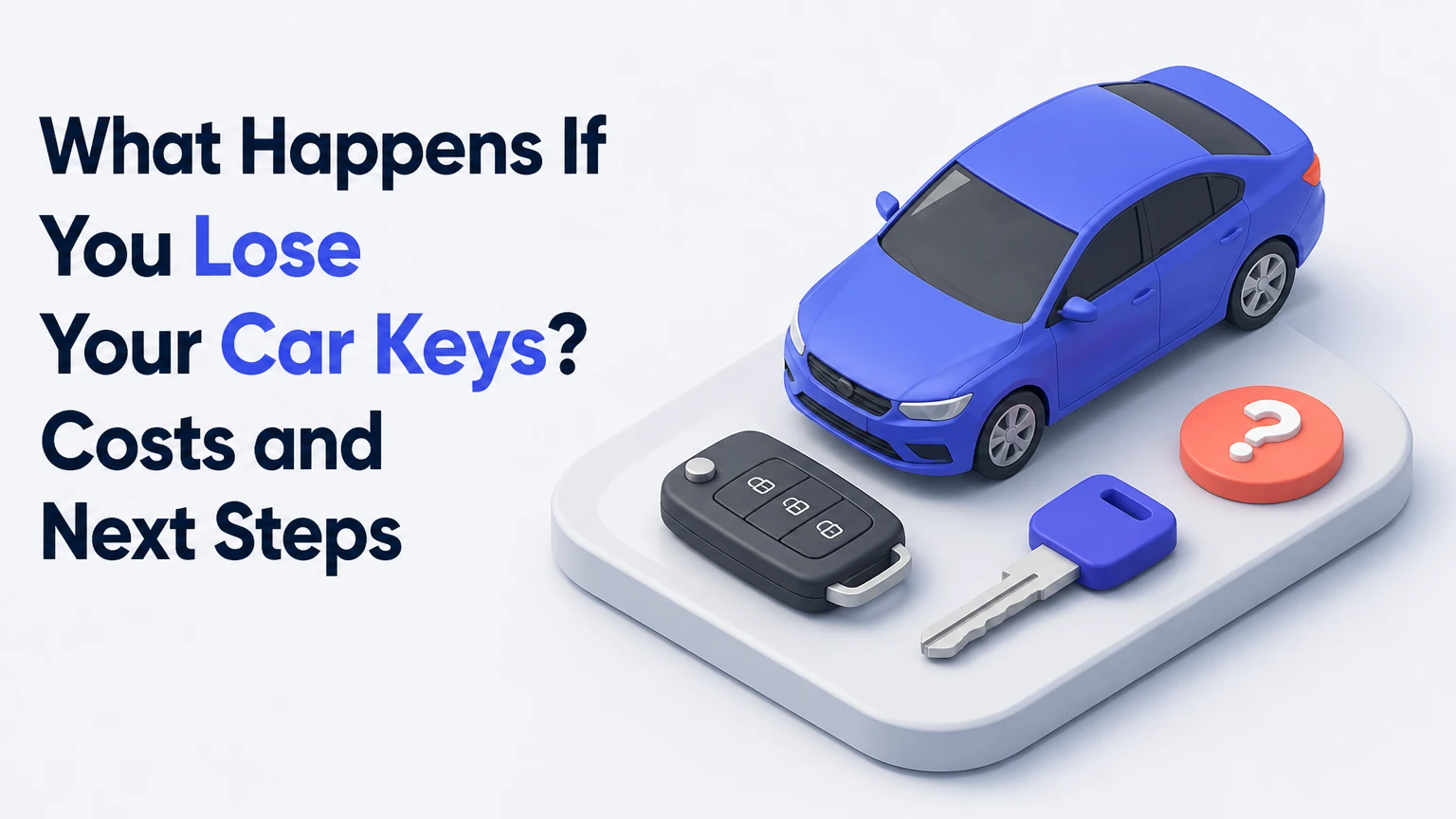
Losing your car keys usually means arranging a replacement that may require both a new mechanical blade and electronic programming. A traditional key can often be copied quickly, while a transponder key or smart fob must be authorized by the vehicle’s immobilizer system. If the key was stolen, ask the provider whether the old key can be erased from the vehicle’s memory.
Key facts at a glance
A transponder key will not start a vehicle unless its chip is recognized by the immobilizer system.
A mobile automotive locksmith can often cut and program a replacement at the vehicle’s location.
A VIN helps identify the correct key cut, but the VIN alone does not prove ownership or guarantee programming compatibility.
Typical replacement prices range from about $10 for a basic duplicate key to more than $1,000 for some luxury smart-key systems.
Erasing a lost key from memory improves security, but the exact procedure varies by make, model, year, and immobilizer design.
If you have one working key, making a spare is usually faster and less expensive than waiting until every key is gone.
What does losing a car key actually mean?
Losing a car key creates one of two problems: access to the vehicle may be lost, and someone else may possess a device that can unlock or start it. The risk depends on whether the missing item is a metal key, remote transmitter, transponder key, or proximity fob connected to a digital identity.
Older vehicles may use only a cut metal blade. A compatible copy can open the door and turn the ignition without electronic authorization. Many vehicles built from the mid-1990s onward add an immobilizer transponder, while newer vehicles commonly combine a remote-control transmitter with a coded starting system.
The physical blade and the electronic identity are separate attributes. A key can fit the door but fail to start the engine, or a fob can lock and unlock the doors while its internal transponder remains unrecognized.
How does the immobilizer recognize a key?
A vehicle immobilizer reads a transponder chip near the ignition cylinder or start button and compares its identifier with authorized records in a body control module, immobilizer module, or engine control unit. If the authentication succeeds, the vehicle permits the starting sequence; if it fails, the engine may crank without starting or may not crank at all.
A push-button vehicle does not necessarily have a simpler system. Proximity fobs communicate through low-frequency antennas and radio-frequency signals, and some models use encrypted challenge-response exchanges. Remote locking and engine authorization can also fail independently.
A lost fob therefore does not automatically make the vehicle unsafe to drive, but leaving the missing fob authorized can create a security exposure. The old key may still unlock doors, operate the trunk, or start the vehicle if the person who has it reaches the correct range.
What should you do first after losing a car key?
Secure the vehicle, search methodically, and identify the key system before ordering anything. The first practical sequence is to check the last known locations, move the vehicle to a visible or secure place if possible, contact roadside assistance if needed, and gather the VIN and ownership documents.
Use this sequence:
- Retrace the last route. Check pockets, bags, vehicle seats, shop counters, parking payment machines, workplace reception areas, and the ground beside the driver’s door.
- Check the vehicle’s status. Confirm whether it is locked, running, parked in a dangerous location, or blocking traffic.
- Use available tracking tools. A Bluetooth tracker attached to a key ring may show a recent location, but a vehicle manufacturer’s connected-car app normally tracks the vehicle, not the key.
- Move the vehicle if a spare is available. Park in a locked garage or well-lit location, especially when the lost key could identify the vehicle.
- Record the VIN. The 17-character VIN is usually visible through the lower driver-side windshield or on registration, insurance documents, or the driver’s door label.
- Call the right provider. Ask for an all-keys-lost quote if no working key remains.
- Request key erasure when appropriate. This is especially important when the key was stolen or lost near the vehicle.
Do not publish a photograph of the key, registration, or VIN online. Those details can help a scammer impersonate an owner or identify the vehicle.
What information and documents are needed?
An automotive locksmith or dealership normally asks for the vehicle make, model, year, VIN, location, identification, and proof of ownership or lawful possession. Registration, title, insurance documentation, and a government-issued driving licence commonly establish the connection between the caller and the vehicle.
A VIN allows a provider to retrieve a factory key code or identify compatible equipment on some vehicles. It does not always reveal the final blade cut, and it cannot replace immobilizer programming. Some manufacturers require a security PIN, online account authorization, or a factory-order process.
| Information or document | Typical source | Why the provider needs it |
|---|---|---|
| 17-character VIN | Dashboard, registration, title | Identifies make, model, year, and key configuration |
| Government identification | Driver’s licence or passport | Confirms the requester’s identity |
| Ownership evidence | Registration, title, insurance policy | Supports lawful key cutting and programming |
| Vehicle location | Parking lot, home address, roadside position | Determines mobile service, access, and towing needs |
| Working key count | One key, two keys, or zero keys | Changes programming method, price, and time |
Can you drive the car without the lost key?
You can drive a vehicle without the physical key only when another authorized starting method is available, such as a working spare, a manufacturer-supported digital key, or an already-running vehicle. A remote-locking fob with a dead battery may still start some vehicles when held against the designated backup reader.
A modern immobilizer does not normally accept a copied metal blade by itself. A traditional key may start an older vehicle, but a transponder-equipped car requires the coded chip. Some connected-car applications can unlock doors or start the engine, yet those features depend on the model, subscription, phone authorization, and vehicle battery state.
Do not leave a running vehicle unattended while searching for the key. Automatic locking behavior varies, and a vehicle may shut down after a remote-start period ends. If a child or pet is locked inside, call emergency services rather than attempting a destructive entry.
How much does a replacement car key cost?
Typical replacement cost ranges from $10-$30 for a basic mechanical duplicate, $75-$250 for many transponder keys, and $200-$600 for many smart fobs, before unusual programming, towing, or luxury-brand charges. Actual pricing depends on the make, model, year, key frequency, supply channel, location, and whether a working key remains.
The following ranges are typical North American practitioner estimates, not fixed prices. Dealer-supplied keys for some European, electric, and high-security vehicles can exceed $800-$1,000, while a simple older key may cost substantially less.
| Key system | Typical replacement price | Typical service time | Main requirement |
|---|---|---|---|
| Mechanical metal key | $10-$60 | 10-30 minutes | Correct blade or key code |
| Laser-cut mechanical key | $50-$150 | 20-45 minutes | Sidewinder cutting machine |
| Transponder key | $75-$250 | 30-90 minutes | Immobilizer programming |
| Remote-head key | $100-$350 | 45-120 minutes | Blade cutting and remote pairing |
| Proximity smart fob | $200-$600 | 60-180 minutes | Vehicle-specific authorization |
| Luxury or high-security smart key | $400-$1,200+ | 1-7 days | OEM ordering or proprietary access |
A spare-key job is often cheaper because the vehicle can authenticate an existing key during programming. An all-keys-lost job may require security-code retrieval, EEPROM or immobilizer procedures, towing, or a factory-order replacement.
What costs extra?
Emergency callout fees, nighttime service, difficult vehicle access, key-fob batteries, towing, dealer programming, replacement door locks, and broken-key extraction can add $25-$500 or more. A quotation should state whether the price includes the blade, remote buttons, transponder, programming, travel, taxes, and a warranty.
Online fobs create a specific financial risk. A fob can have the correct appearance but the wrong frequency, part number, encryption generation, or used status. Some vehicles accept a previously used fob only after specialist resetting, while others permanently associate it with another vehicle.
How long does replacement take?
A basic mechanical key commonly takes 10-30 minutes, a transponder or remote-head key takes 30-120 minutes, and a smart key can take 1-3 hours when the correct part is available. Dealer orders for restricted or unavailable keys may take one to seven business days, with shipping and security verification causing the delay.
A mobile locksmith often works faster when the vehicle is accessible and the provider carries the correct blank and diagnostic equipment. A dealership may need a tow and appointment, but it has direct access to proprietary systems for supported models.
| Situation | Typical time | Likely constraint |
|---|---|---|
| One working metal key remains | 10-30 minutes | Correct blank and cutting code |
| One working transponder key remains | 30-60 minutes | Compatible programmer |
| All keys lost on a common model | 60-180 minutes | Security access and immobilizer procedure |
| Smart fob in local inventory | 1-3 hours | Pairing and battery condition |
| OEM key ordered for restricted model | 1-7 business days | VIN verification and shipping |
| Vehicle must be transported to dealer | 2-8 hours total | Tow availability and appointment |
Which replacement option should you choose?
Choose a mobile automotive locksmith for most stranded owners of common vehicles, choose a dealership when proprietary programming or an OEM-only part is required, and check roadside or insurance benefits before paying. The correct choice depends on access, urgency, vehicle security system, and the quoted total rather than the advertised key price.
| Provider | Typical total cost | On-site capability | Best fit | Common limitation |
|---|---|---|---|---|
| Mobile automotive locksmith | $75-$600 | Cutting and programming at location | Common vehicles and emergencies | May lack software for new luxury models |
| Main dealership | $200-$1,200+ | Usually requires vehicle access or tow | Restricted OEM systems | Higher labor and towing cost |
| Roadside assistance | $0-$250 benefit value | Lockout, tow, or subcontracted locksmith | Active membership or policy | Coverage limits and reimbursement rules |
| Manufacturer key program | $150-$1,000+ | Usually delivery, then programming | OEM-controlled replacement | Shipping and identity checks |
When is a locksmith the better choice?
A qualified automotive locksmith is usually the practical choice when the vehicle is stranded, the model is common, and a mobile technician can verify the key specification before dispatch. Ask whether the quote includes all-keys-lost programming, key deletion, remote functions, taxes, and a written workmanship warranty.
A locksmith is not automatically the cheapest option. A low advertised price may exclude the diagnostic visit, programming, or emergency travel. Confirm the business address, identification, insurance, online reviews, and total price before authorizing work.
When is the dealership the better choice?
A dealership is often preferable for a new, high-security, luxury, leased, or warranty-covered vehicle when the model requires an OEM key ordered against the VIN. BMW, Mercedes-Benz, Audi, Land Rover, and some newer electric vehicles can impose security procedures that independent providers cannot legally or technically bypass.
The dealership is not always the fastest option. Parts availability, appointment queues, mandatory towing, and manufacturer authentication can turn a same-day problem into a multi-day process.
What changes when a key is stolen?
A stolen key requires a security response, not only a replacement. Ask the dealer or locksmith whether the missing key can be removed from the authorized-key list, change any connected-car credentials, and report the theft to police or your insurer when circumstances make that useful.
Key deletion has limits. On some vehicles, the immobilizer authorization can be erased while the remote transmitter remains able to operate locks until separate pairing occurs. On other models, the vehicle cannot selectively delete one key, so a technician may need to reprogram every remaining key.
If the key was lost with a registration document, address label, house key, or garage remote, secure the home and vehicle together. A replacement car key alone does not address the wider access risk.
Why is the new key not recognized?
A replacement key may fail because the part number or radio frequency is wrong, the transponder was not programmed, the vehicle battery voltage is low, the fob battery is installed incorrectly, or the immobilizer has entered a temporary security lockout. The correct remedy depends on which function fails.
| Symptom | Likely cause | First check | Corrective action |
|---|---|---|---|
| Doors do not lock remotely | Wrong frequency or dead coin cell | Fob battery and part number | Replace battery or use compatible fob |
| Doors work, engine will not start | Unprogrammed transponder | Security or key warning light | Complete immobilizer programming |
| Engine cranks but does not run | Immobilizer rejection or fuel issue | Key indicator and spare key | Scan immobilizer, then diagnose engine |
| Push button does nothing | Vehicle battery or proximity issue | Interior lights and voltage | Charge vehicle battery, use backup reader |
| Programming repeatedly fails | Voltage, software, or timeout | Battery voltage and procedure | Stabilize voltage and follow model procedure |
| One key disappeared after programming | Memory limit or incorrect sequence | Authorized-key count | Relearn all retained keys |
A coin-cell battery powers many remote functions, but the passive transponder in some keys can operate without that battery. Holding a weak fob at the manufacturer’s backup location may allow starting, although the location differs by model.
Do not repeatedly attempt random programming sequences. Some vehicles impose a timed security lockout, and incorrect procedures can erase previously working keys or create a diagnostic fault.
Will insurance cover a lost car key?
Insurance coverage varies by policy, while roadside assistance, key-cover add-ons, home insurance, warranty plans, and vehicle service contracts may handle different parts of the expense. A standard comprehensive or collision policy often does not automatically pay for an ordinary lost key unless the policy includes specific key replacement coverage.
BrokerLink’s consumer insurance guidance distinguishes ordinary lost-key coverage from theft-related claims and policy add-ons. The deductible can also exceed the replacement price, making a claim financially unattractive even when coverage exists.
Check these terms before approving work:
- Key replacement limit per claim
- Deductible and number of covered incidents
- Locksmith reimbursement rules
- Towing and mobile-service limits
- OEM-only or aftermarket-part restrictions
- Whether stolen keys require a police report
- Whether a rental vehicle or leased vehicle follows a different process
Keep the invoice, old parts, programming report, and proof of ownership. Insurers may require those records for reimbursement.
What are the important edge cases?
Several situations change the normal replacement process because access, ownership, or security conditions are different.
A key is locked inside the vehicle
Call roadside assistance or a licensed lockout provider rather than forcing a window or prying a door frame. Modern vehicles contain side-impact airbags, wiring looms, weather seals, and laminated glass that can make amateur entry more expensive than professional unlocking.
The vehicle is financed or leased
A finance company generally does not need to authorize an ordinary replacement, but a lease contract may require OEM parts or a particular dealer. Return inspections can charge for missing keys, so retain the replacement receipt and verify that every original function works.
The vehicle is a rental
Contact the rental company first. A rental agreement may prohibit independent key cutting, and the company’s roadside plan may control towing and replacement. Personal insurance may cover some costs, but the rental contract determines your immediate obligations.
The vehicle has remote start
Confirm that the replacement fob supports remote start, trunk release, panic alarm, and lock confirmation. A key that starts the engine but lacks the correct remote buttons is functionally incomplete and may require a second purchase.
You have a digital key
A manufacturer digital key can provide temporary access on supported vehicles, but phone authorization is not a universal substitute for a physical emergency key. Charge the phone, verify the account, and carry the emergency blade if the model supplies one.
When should you order a spare?
Order a spare while one authorized key still works, because duplication usually avoids the more expensive all-keys-lost process. A practical rule is to replace or duplicate the key immediately when the vehicle has only one remaining authorized key, particularly for a push-button model that cannot be started with a generic blade.
Ask for two separate quotes: a duplicate using the existing key and an all-keys-lost replacement. The difference often includes security access, towing, and additional labor, not merely the price of another blank.
For fleet vehicles, store keys in a controlled cabinet, record the key number and vehicle assignment, and keep at least two operational keys per vehicle. A third key may be justified when downtime costs more than replacement.
The Bottom Line
What happens if you lose your car keys depends mainly on the vehicle’s key technology and whether the missing key is merely lost or potentially stolen. Search and secure the vehicle first, gather the VIN and ownership documents, then compare a mobile automotive locksmith with the dealership before arranging a tow.
A mechanical key may take minutes and cost tens of dollars. A transponder key or smart fob may require immobilizer programming, cost hundreds of dollars, and take several hours or longer if an OEM part must be ordered. Request old-key deletion when security matters, test every function before paying, and make a spare before the remaining key disappears.
Frequently Asked Questions
Can a locksmith make a car key from the VIN?
A locksmith can often cut a key using VIN-linked information, but the VIN alone does not guarantee a working replacement. The provider still needs ownership verification, the correct blank, and vehicle-specific programming equipment when the car uses a transponder, remote-head key, or smart fob.
Does losing a key drain the car battery?
A lost key does not usually drain the vehicle battery by itself. A proximity fob left near the vehicle can repeatedly communicate with some systems, and an unsuccessful replacement attempt may leave modules awake, but a weak battery is more commonly caused by age, lights, accessories, or a charging fault.
Can someone start my car if they find my key?
Someone may start the car if the found key remains electronically authorized and reaches the vehicle. Remote range alone does not always permit starting, but the risk increases when the key was lost near the vehicle or with identifying documents. Request key deletion after a suspected theft.
Is an aftermarket key safe to use?
An aftermarket key can work safely when its part number, frequency, transponder type, and programming method match the vehicle. Generic appearance is not enough. Use a reputable supplier, verify return terms, and have the completed key tested for starting, locking, trunk release, panic alarm, and remote start.
Should you tow the car to a dealership?
Do not tow first unless the vehicle manufacturer or a verified provider requires it. Many mobile automotive locksmiths can cut and program common replacement keys at the vehicle’s location. A dealership tow becomes reasonable when the model needs proprietary software, an OEM-ordered key, or a security procedure unavailable on-site.
How do you prevent losing the replacement key?
Keep one spare in a secure, separate location, attach a tracker without exposing registration details, and avoid storing both keys together. For smart fobs, replace weak coin-cell batteries before failure and record the part number, vehicle VIN, and provider warranty with the maintenance documents.