A locksmith typically costs $75-$200 to unlock a house during standard business hours in the United States. An after-hours emergency commonly totals $150-$350, while a broken, high-security, or smart lock requiring replacement can bring the invoice to $200-$500 or more. Local labor rates, travel, lock condition, and hardware determine the final price.
Key Facts at a Glance
- A standard residential lockout usually costs $75-$200, including a basic service charge and simple entry.
- An emergency locksmith visit commonly costs $150-$350 at night, on weekends, or on holidays.
- A damaged lock that needs replacement commonly produces a $200-$500 total invoice.
- A locksmith may charge a $50-$150 trip fee before labor or parts.
- A basic non-destructive entry often takes 15-30 minutes after the technician arrives.
- Locksmith prices are local estimates, not universal rates; the written, on-site quote controls the transaction.
How Much Does a Locksmith Cost to Unlock Your House?
A house lockout costs $75-$200 for a straightforward daytime opening, assuming the lock is intact and the technician can gain entry without replacing hardware. The price rises when the call occurs outside normal hours, the property is far from the shop, the door is misaligned, or the cylinder is damaged.
The quoted price may represent a flat-rate opening, a service-call minimum, or an estimated combination of dispatch and labor. Ask which interpretation applies before authorizing work. A price such as “$29 service” may exclude the actual unlocking charge, mileage, labor minimum, and replacement parts.
Typical Residential Locksmith Prices
| Service situation | Typical total price | Typical time on site | Main price driver |
|---|---|---|---|
| Daytime standard lockout | $75-$200 | 15-30 minutes | Lock type and local minimum |
| Night or weekend lockout | $150-$350 | 20-45 minutes | Emergency labor and dispatch |
| Broken key removal | $100-$250 | 20-40 minutes | Extraction difficulty and cylinder damage |
| Lock drilling and replacement | $200-$500 | 45-90 minutes | New deadbolt, cylinder, and installation |
| Smart-lock access failure | $150-$300 | 20-45 minutes | Brand, battery access, and override design |
| High-security cylinder failure | $250-$600+ | 45-120 minutes | Restricted hardware and specialist tools |
These are typical United States consumer ranges, not guaranteed quotes. New construction, luxury hardware, remote locations, and commercial-grade access systems can exceed the table.
What Does the Locksmith Bill Include?
A locksmith invoice usually contains a service-call or trip charge, labor, emergency surcharge, and hardware, although many companies combine those items into one flat rate. The most important question is whether the quoted total includes the opening, replacement parts, installation, taxes, and any return visit.
| Billing item | Typical amount | When it applies | Question to ask |
|---|---|---|---|
| Service call or dispatch | $50-$150 | Most mobile visits | Is this credited toward labor? |
| Standard labor | $50-$100 per hour | Daytime work | Is there a one-hour minimum? |
| Emergency labor | $100-$250 per hour | Nights, weekends, holidays | What exact hours trigger the surcharge? |
| Lock cylinder | $40-$150 | Rekey or cylinder replacement | Is installation included? |
| Residential deadbolt | $60-$300 | Full hardware replacement | Which grade and brand are included? |
| Travel or mileage | $0-$100+ | Rural or distant calls | Is the travel fee fixed or mileage-based? |
Flat-rate pricing can be easier to understand than hourly billing, but only when the rate defines the job precisely. “Unlock one standard residential door” is meaningful; “starting at $19” is not a complete price.
Why Does the Advertised Price Change on Arrival?
A legitimate technician can revise an estimate when the physical condition differs from the phone description, such as a broken cylinder or a jammed multipoint door. A technician should explain the reason, provide the revised price, and obtain approval before drilling, replacing, or adding labor.
A large unexplained increase is a warning sign. The Federal Trade Commission advises consumers to check a locksmith’s identity, business address, and estimate before work begins. A branded van, local telephone number, and online listing alone do not prove that the operator is reputable.
How Much Does an Emergency House Lockout Cost?
An emergency house lockout commonly costs $150-$350, with higher totals possible for holidays, distant travel, severe weather, high-security locks, or replacement hardware. The emergency surcharge often reflects a higher minimum charge rather than only the number of minutes spent manipulating the lock.
A short visit can still cost more than a longer daytime job because dispatching a technician at 2 a.m. carries a separate operating cost. Ask for the total before dispatch, including the emergency fee and the price range for likely replacement parts.
What Causes After-Hours Pricing?
- Time: Night, Sunday, and holiday calls often use a higher minimum.
- Distance: Rural calls may add mileage or a longer travel charge.
- Urgency: A child, vulnerable adult, medical need, or unsafe location may require immediate dispatch.
- Access complexity: A multipoint patio door, restricted key system, or damaged frame takes longer.
- Payment conditions: Credit-card fees, taxes, and financing charges may appear separately.
A locksmith who refuses to provide any price range before arrival creates unnecessary financial risk. Exact diagnosis may require an inspection, but a professional can usually state the dispatch fee, minimum labor, and likely upper range.
What Does Each House Lockout Service Cost?
The service type determines the likely invoice. A simple opening preserves the lock, while key extraction, drilling, smart-lock recovery, or replacement adds tools, labor, and hardware.
| Lockout service | Typical price | Typical duration | Likely outcome |
|---|---|---|---|
| Standard deadbolt opening | $75-$150 | 15-30 minutes | Existing lock remains usable |
| Handle-lock opening | $75-$150 | 15-30 minutes | Latch or cylinder remains installed |
| Broken-key extraction | $100-$250 | 20-40 minutes | Key removed, lock tested afterward |
| Lock rekeying after entry | $100-$250 | 30-60 minutes | Existing hardware receives new key combination |
| Deadbolt replacement | $150-$400 | 30-75 minutes | New lock installed and aligned |
| Drilling damaged high-security lock | $200-$500+ | 45-90 minutes | Cylinder or lock assembly replaced |
| Smart-lock recovery or replacement | $150-$400 | 20-75 minutes | Electronic or mechanical access restored |
A lockout price does not automatically include rekeying. If a lost key may identify your address, request rekeying after entry even when the original lock opens normally.
How Long Does a Residential Lockout Take?
A residential locksmith lockout usually takes 15-30 minutes for a standard intact lock, plus travel time. Broken keys, misaligned doors, smart locks, restricted cylinders, and replacement work commonly extend the on-site job to 45-90 minutes.
The first task is diagnosis, not immediate drilling. The technician should identify whether the problem is a lost key, a failed latch, a seized cylinder, a door-frame alignment issue, or an electronic power failure.
What Happens During a Professional Lockout?
- The technician confirms authorization. Identification, lease information, ownership evidence, or another access-control check may be requested. Requirements vary by provider and local law.
- The door and lock are assessed. The technician checks the cylinder, latch, hinges, strike plate, frame pressure, lock brand, and visible damage.
- A price is confirmed. The technician explains the proposed method and any replacement risk before work starts.
- The least damaging suitable method is attempted. Professional entry techniques differ by lock design, and a qualified operator avoids unnecessary damage.
- The lock is tested. After opening, the technician checks key operation, latch movement, bolt alignment, and door closure.
- Repair or replacement follows if needed. The final invoice should separate labor, parts, and taxes.
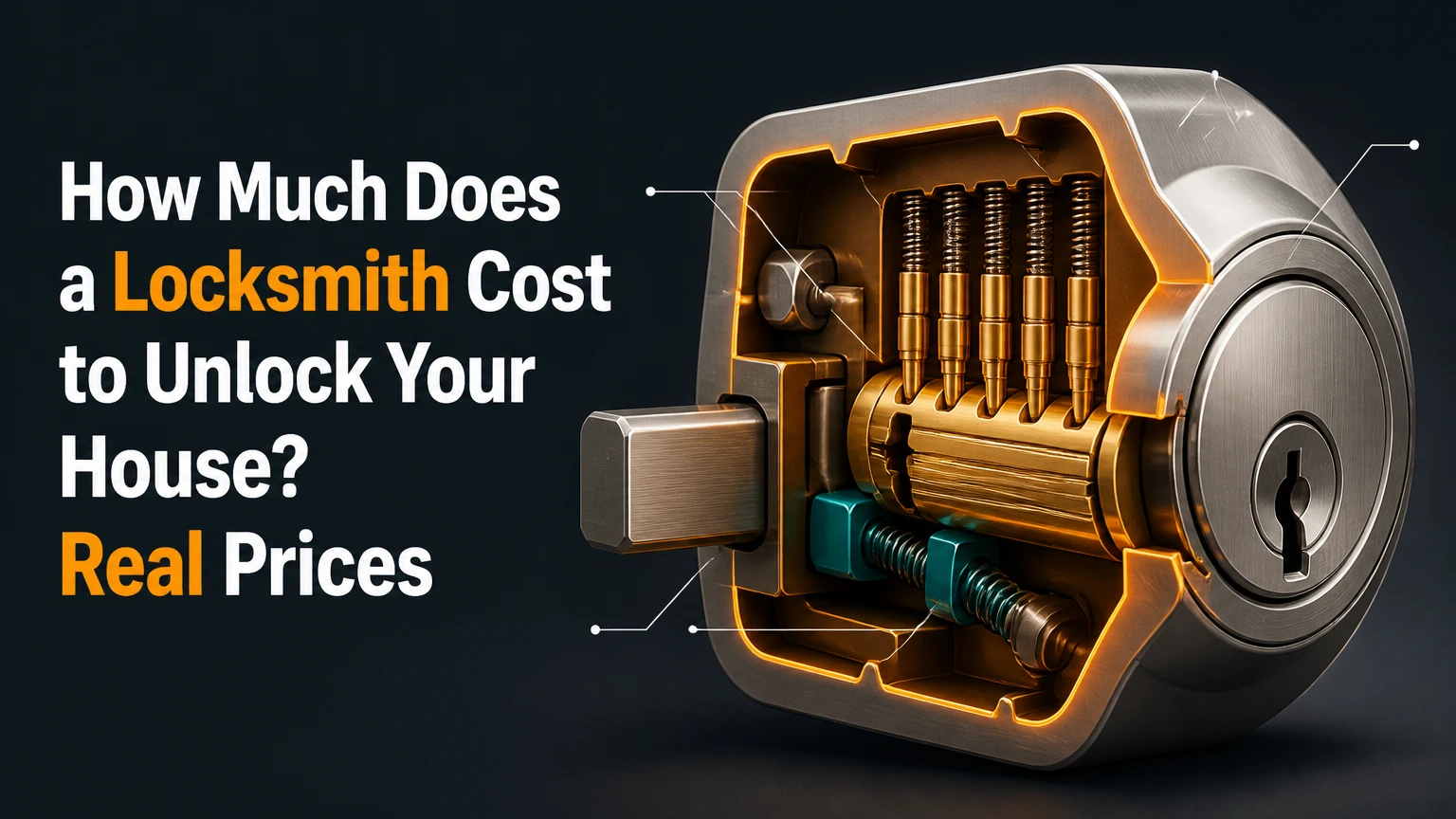
The AI Overview’s description of pins, wafers, torque, and shear lines explains one lock mechanism, but homeowners do not need to reproduce those techniques. Attempting improvised entry can damage the cylinder, weather seal, frame, or security system.
Which Entry Method Costs the Least?
Non-destructive entry usually costs the least, because it preserves the existing hardware and avoids a replacement part. Picking, decoding, or other professional techniques do not work on every lock, however, and a technician should not promise that a particular method will succeed before examining the door.
| Entry approach | Typical added cost | Hardware damage | Appropriate use |
|---|---|---|---|
| Professional non-destructive opening | $0-$100 beyond minimum | Usually none | Intact standard residential lock |
| Key extraction and opening | $50-$200 | Possible cylinder wear | Key fragment inside keyway |
| Electronic emergency power or override | $0-$150 beyond visit | Usually none | Compatible smart-lock failure |
| Cylinder drilling | $60-$200 labor | Cylinder destroyed | Broken or resistant cylinder |
| Full lock replacement | $80-$300 hardware | Existing unit removed | Failed, compromised, or obsolete lock |
Drilling is not a guaranteed “100% success” method in every real-world situation. It can open a cylinder, but a collapsed mechanism, unusual construction, reinforced door, or separate latch failure may require additional work.
What Should You Know About Bumping and Shimming?
Bumping and shimming are specialized entry concepts, not homeowner troubleshooting methods. Their legality and suitability depend on the lock, property, and local rules, while modern anti-bump and restricted-key systems reduce their usefulness.
A locksmith should select a method that protects the door and preserves evidence of unauthorized tampering. Ask for non-destructive entry first, but accept that a mechanically failed lock may require drilling and replacement.
What Is the Cheapest Safe Alternative to a Locksmith?
The cheapest safe alternative is an authorized entry route that already exists, such as a landlord’s emergency service, a trusted keyholder, a building manager, or a roadside or home-insurance benefit. Breaking a window is rarely economical because glass, frame, cleanup, and temporary security can exceed the original lockout fee.
Before calling, check:
- A spare key held by a trusted person.
- An attached garage with a separate working entrance.
- A landlord, property manager, or concierge.
- Homeowners insurance, renters insurance, roadside membership, or bank-card assistance.
- A smart-lock manufacturer’s documented emergency procedure.
- A safe, accessible secondary entrance that does not require climbing or forced entry.
Do not force a key, kick the door, pry a window, or bypass an alarm. Those actions can cause injury, trigger a police response, or convert a $100 lockout into a $500-plus repair.
How Much Does a Smart-Lock Lockout Cost?
A smart-lock lockout commonly costs $150-$300, although a simple battery failure may be resolved within the standard service minimum. Brand-specific emergency terminals, a hidden mechanical keyway, damaged electronics, and complete replacement can push the total toward $400.
Check the owner’s manual before calling. Some models accept a temporary external battery at designated contacts, while others require a concealed key, a USB power input, or a manufacturer-specific override. A 9-volt battery is not a universal solution, and touching power to the wrong contacts can damage electronics.
| Smart-lock failure | Typical solution | Typical cost | Typical time |
|---|---|---|---|
| Dead internal batteries | Approved external power | $75-$200 | 15-30 minutes |
| Forgotten code or app failure | Mechanical override or reset | $100-$250 | 20-45 minutes |
| Jammed motorized bolt | Door alignment and diagnosis | $150-$300 | 30-60 minutes |
| Failed electronic module | Lock replacement | $250-$600 | 60-120 minutes |
Smart locks can fail because the bolt is under frame pressure, not because the motor is dead. Pulling or pushing the door gently while using the manufacturer-approved control may release pressure, but never force the bolt or keypad.
What Happens When a Key Breaks Inside the Lock?
A broken-key service usually costs $100-$250, including the visit and extraction, and takes 20-40 minutes when the fragment is visible and the cylinder is undamaged. If the key is deeply lodged, the lock is corroded, or the customer has pushed the fragment farther inside, replacement may be more economical.
Do not use superglue, a knife, or another key to pull the fragment. Adhesive can permanently bond the key to the pins, while improvised tools can scratch the keyway or damage the cylinder. Save all pieces of the key because a locksmith may use them to cut a replacement.
After extraction, test the lock several times with a correctly cut key. If the key broke because the cylinder binds, replacing only the key may leave the underlying failure unresolved.
Should You Rekey or Replace the Lock?
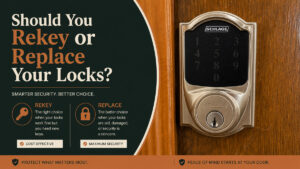
Rekey the lock when the hardware works and the concern is lost or unreturned keys; replace the lock when the cylinder, latch, frame fit, or security grade is defective. Rekeying changes the internal pin arrangement without replacing the exterior lock body, so it usually costs less than a new deadbolt.
| Situation | Rekeying | Replacement | Better choice |
|---|---|---|---|
| Lost house key | $80-$200 | $150-$400 | Rekey if hardware works |
| Former tenant kept a key | $80-$200 | $150-$400 | Rekey several locks alike |
| Loose or cracked deadbolt | Not suitable | $150-$400 | Replace |
| Sticking bolt from alignment | $100-$250 repair | $150-$400 | Repair alignment first |
| Outdated Grade 3 deadbolt | $80-$200 | $150-$500 | Replace if security upgrade matters |
| Broken high-security cylinder | $150-$300 | $250-$600+ | Replace damaged component |
ANSI/BHMA grades provide a useful hardware comparison, but grade alone does not solve a weak door frame. A strong deadbolt installed into short screws or a poorly secured strike plate may provide less practical resistance than a properly installed, lower-cost lock.
What Should Renters Do During a Lockout?
Renters should contact the landlord or property manager before hiring a locksmith, unless immediate danger requires emergency services. A lease may assign lockout costs, restrict hardware changes, or require the use of an approved contractor.
Tell the locksmith that you rent the property and request non-destructive entry when feasible. Do not authorize a new deadbolt, rekey, or smart-lock conversion without permission unless the landlord has clearly delegated that authority.
Keep the invoice, technician details, photographs, and written authorization. Those records support reimbursement disputes and help prove that the work restored rather than altered the property.
How Can You Avoid an Overpriced Locksmith?
Avoid an overpriced locksmith by confirming the company’s legal identity, complete price structure, arrival details, and payment terms before dispatch. A reliable operator can state the service-call fee, normal or emergency minimum, likely parts range, and conditions that would change the estimate.
Use this hiring checklist:
- Search the business name, not only the phrase “locksmith near me.”
- Verify a local address and working local telephone number.
- Ask whether the technician arrives in a marked vehicle and carries identification.
- Request a written or texted estimate with the opening fee and replacement range.
- Ask whether drilling requires your approval.
- Confirm accepted payment methods and whether taxes are included.
- Do not authorize work after a major unexplained price increase.
- Obtain an itemized receipt before the technician leaves.
The Associated Locksmiths of America recommends that consumers verify a locksmith’s credentials and identification before allowing access work. A direct quote from its consumer guidance captures the practical rule: “Ask for identification.”
A low price is not proof of fraud, and a high price is not proof of quality. The warning pattern is an unusually low initial figure followed by pressure, vague explanations, an unmarked vehicle, or refusal to provide an itemized invoice.
Why Do Locksmith Prices Vary by Location?
Locksmith prices vary by location because labor markets, travel distances, property types, local licensing rules, and emergency demand differ between regions. A daytime metropolitan lockout may fall near $100-$180, while a rural night call with substantial travel can exceed $300 before replacement hardware.
Local cost also depends on the door. A basic single-cylinder deadbolt, a mortise lock, a multipoint European door, and a reinforced security cylinder require different tools and labor.
When requesting a quote, provide:
- City and approximate neighborhood.
- Door type and number of locks.
- Lock brand or a clear photograph, if safe.
- Whether the key is lost, broken, or merely not turning.
- Whether the call is daytime, nighttime, weekend, or holiday.
- Whether a child, vulnerable person, or medical emergency is inside.
Accurate details reduce surprise charges. Never send sensitive access codes or photographs that reveal an alarm password.
What If the Lockout Is Caused by the Door, Not the Lock?
A door-frame or latch-alignment problem can make a working lock appear defective. Pressure from warped wood, swollen weather stripping, loose hinges, or a shifted strike plate may prevent the bolt from retracting.
A technician should diagnose the door before replacing the cylinder. If the lock opens after pressure is relieved, the appropriate repair may involve hinge adjustment, strike alignment, screw replacement, or weather-seal correction rather than a new lock.
This distinction affects both price and reliability. Replacing a cylinder without correcting frame pressure can cause the new lock to bind again within days.
The Bottom Line
For a normal daytime house lockout, budget $75-$200. For a night, weekend, or holiday emergency, budget $150-$350, and reserve $200-$500 or more when drilling, lock replacement, a broken key, or a smart-lock failure is possible. Ask for a complete price before dispatch, approve destructive work separately, and verify the technician’s identity on arrival.
The answer to how much does a locksmith cost to unlock your house depends most on timing, travel, lock condition, and whether the hardware survives entry. A documented quote and a clear repair plan matter more than the lowest advertised starting price.
Frequently Asked Questions
Will a locksmith unlock a house without proof of ownership?
A locksmith may require identification and evidence of lawful occupancy before opening a residential door, but exact requirements vary by company and jurisdiction. A lease, utility bill, government identification, property record, or landlord confirmation may help. If someone is in immediate danger, call emergency services rather than waiting for a routine commercial lockout visit.
Does homeowners insurance cover a locksmith lockout?
Some homeowners or renters insurance policies cover locksmith services after theft, vandalism, or a covered loss, but ordinary accidental lockouts are often excluded. Check the policy’s emergency-service, deductible, and reimbursement provisions before dispatch when circumstances permit. Roadside memberships and premium bank cards sometimes offer separate lockout benefits.
Can a locksmith make a key after unlocking the door?
Yes, a locksmith can often cut a replacement key after opening the door, provided the lock is serviceable and the key profile is available. Typical residential key cutting may add $5-$30 per key, while restricted, high-security, or coded keys can cost $30-$150 or more depending on authorization and equipment.
Is it cheaper to call the police or fire department?
Police and fire departments generally do not provide routine residential lockout service, and forced entry can damage the door or create safety risks. Call emergency services when a person faces immediate danger, a fire threat, or a medical crisis. For an ordinary lost-key situation, a locksmith or authorized property manager is the appropriate option.
How can I prevent another house lockout?
Give one spare key to a trusted person, maintain a tested mechanical backup for a smart lock, and replace worn keys before they bend or crack. Review landlord and insurance procedures, save a verified local locksmith number, and lubricate or adjust sticking hardware through a qualified professional instead of forcing the key.