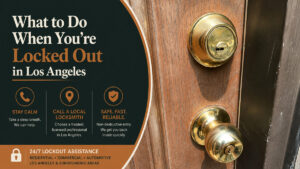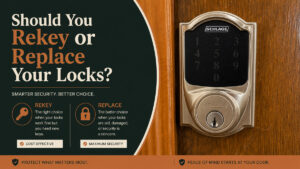
You generally cannot pick a standard pin-tumbler lock easily without tools because lock picking requires controlled tension and precise manipulation of internal pins. If you own the property or have permission, the safest no-tool options are a manufacturer-designed privacy-lock release, an available spare key, an authorized property manager, roadside assistance, or a licensed locksmith.
Safety boundary: Do not force, manipulate, drill, pry, or bypass a lock that you do not own or have explicit permission to open. Household-object lock-bypass instructions can enable unlawful entry and can also turn a simple lockout into a damaged door, failed cylinder, or expensive repair.
Key Facts at a Glance
- A standard deadbolt normally cannot be opened with a credit card because a deadbolt does not retract like a spring latch.
- Interior bedroom and bathroom privacy locks often include a manufacturer-designed emergency-release feature on the outside handle.
- Paperclips, bobby pins, knives, and cards are unreliable substitutes for professional entry equipment and may damage the lock.
- A legitimate locksmith should normally confirm your identity, ownership, tenancy, or authorization before opening a property.
- A child, vulnerable adult, fire, medical emergency, or dangerous temperature requires emergency services, not a lock-picking experiment.
- The fastest low-risk solution is usually a spare key, building manager, landlord, roadside-assistance benefit, or locksmith.
Can You Pick a Lock Easy Without Tools?
A standard pin-tumbler lock is not realistically easy to pick without tools, even when the lock appears basic. The lock cylinder contains spring-loaded pin pairs that must align at a precise boundary before the plug can rotate, while controlled rotational pressure is applied at the same time.
Paperclips and bobby pins may resemble entry tools, but resemblance does not create the necessary rigidity, shape, tolerances, or feedback. A broken piece can remain inside the keyway, and excessive force can deform pins or damage the cylinder. Household objects also do not address restricted keyways, security pins, hardened components, or a deadbolt’s separate locking mechanism.
The practical answer is therefore not “find the easiest improvised tool.” It is “identify the lock, confirm authorization, and choose the least destructive legitimate access method.”
What Should You Do First After Getting Locked Out?
Start by checking whether the problem is a missing key, a malfunctioning lock, a door that is only latched, or an emergency involving a person or animal. That distinction determines whether you need a spare key, building support, a locksmith, or emergency responders.
Use this sequence:
- Move to a safe location. Avoid standing in traffic, extreme weather, or an unsecured area while troubleshooting.
- Check every authorized entry. Try doors, windows, a garage entry, or another access point only if you normally use it and can enter without climbing or forcing anything.
- Contact people with legitimate access. Call household members, a landlord, building management, a trusted neighbor with a spare key, or workplace facilities.
- Check included services. Home insurance, rental policies, auto clubs, roadside-assistance plans, and smart-lock subscriptions may include lockout support.
- Photograph the lock and door. A clear photo helps a locksmith identify a deadbolt, mortise lock, rim cylinder, keypad, or privacy latch.
- Stop before applying force. Prying, kicking, drilling, or inserting improvised objects can increase the final bill and reduce the chance of non-destructive entry.
You have reached the correct next step when you know the lock type, can prove authorization, and have a documented price or service route.
Which Lock Type Are You Dealing With?
Lock type matters because a privacy latch, deadbolt, padlock, filing-cabinet cam lock, vehicle lock, and safe use different mechanisms. The table below identifies the usual safe response without explaining how to defeat any mechanism.
| Lock or access system | Common location | Typical no-tool option | Best authorized next step |
|---|---|---|---|
| Privacy lock | Bedroom or bathroom | Manufacturer emergency release | Check the handle manual or contact maintenance |
| Spring-latch entry lock | Interior or low-security door | Spare key or authorized access | Ask the property manager or call a locksmith |
| Deadbolt | Exterior residential door | Spare key, keypad code, or app | Use the registered access method or locksmith |
| Padlock | Gate, shed, locker, or storage unit | Spare key or registered combination | Contact the owner, facility, or locksmith |
| Cam lock | Cabinet, desk, mailbox, or filing cabinet | Replacement key from code or manufacturer | Contact the manufacturer or facilities team |
| Vehicle lock | Car, van, or motorcycle | Remote app, roadside service, spare key | Call roadside assistance or an automotive locksmith |
| Safe or vault | Home or office safe | Recovery code and manufacturer process | Use the manufacturer or a safe technician |
| Smart lock | Residential or commercial door | Battery backup or authorized app | Follow the model’s recovery procedure |
What Is Different About an Interior Privacy Lock?
An interior privacy lock often has a built-in emergency-release feature because the lock is intended to provide privacy rather than high security. The release may use a straight tool supplied with the product, a concealed slot, or a small exterior opening, but the exact design varies by manufacturer.
Use only the release method described in the handle or lock’s instructions. If the door is occupied, announce yourself, ask the occupant to unlock it, and contact building maintenance when communication is impossible. Do not assume that an exterior opening indicates the same release method on every model.
Why Do Cards, Knives, and Paperclips Often Fail?
Cards and knives target the door’s latch area rather than the cylinder, so they generally fail against deadbolts, reinforced strike plates, anti-shim latches, inward-opening doors, tight weather seals, and correctly aligned frames. Paperclips and bobby pins are poor substitutes for purpose-built lock tools because they bend, twist, and break under small amounts of force.
| Household object | Mechanism it may be associated with | Main limitation | Likely consequence of misuse |
|---|---|---|---|
| Plastic card | Spring latch | Deadbolt and reinforced strike plate remain engaged | Bent card, damaged weather seal, scraped finish |
| Paperclip | Improvised manipulation | Low stiffness and unpredictable shape | Fragment trapped in keyway |
| Bobby pin | Improvised manipulation | Weak control and inconsistent dimensions | Scratched cylinder or bent pin |
| Knife | Low-security hardware | Injury risk and poor control | Cut hand, bent hardware, damaged door |
| Hairpin | Improvised manipulation | Coating and thin steel interfere with feedback | Broken fragment inside cylinder |
| Wire | General probing | Cannot reliably reproduce a key or controlled tool | Jammed mechanism or damaged retaining parts |
The counterintuitive point is that a lock that looks cheap can be harder to open safely than a high-quality training lock. Low-cost cylinders often have rough machining, inconsistent pin movement, and little tolerance for foreign objects.
What Are the Safest Alternatives to Lock Picking?
The safest alternatives preserve the lock, document authorization, and use an access method designed for that property. Choose the first available option in the table rather than escalating immediately to force.
| Situation | First choice | Second choice | Avoid |
|---|---|---|---|
| Home entry | Spare key or household member | Landlord or locksmith | Prying a door or drilling a cylinder |
| Apartment or rental | Property manager | Licensed locksmith with tenant proof | Removing shared building hardware |
| Office or school | Facilities or security desk | Authorized locksmith | Trying another employee’s key |
| Vehicle | Remote unlock or roadside plan | Automotive locksmith | Breaking glass or forcing a door |
| Storage unit | Facility office | Registered locksmith | Cutting another person’s lock |
| Bedroom privacy door | Official emergency release | Maintenance or locksmith | Force against the handle |
| Smart lock | App, backup code, or battery procedure | Manufacturer support | Repeated incorrect codes |
| Mailbox or cabinet | Manufacturer key replacement | Facilities or authorized locksmith | Prying the cam or drawer |
Can a Locksmith Open a Door Without Damaging It?
A qualified locksmith can often perform non-destructive entry, but no professional can guarantee a damage-free result before inspecting the lock, door alignment, cylinder condition, and security features. A worn, seized, broken, or previously damaged lock may require cylinder replacement even when the technician begins with non-destructive methods.
Ask these questions before authorizing work:
- What is the service-call fee?
- Is labor billed separately?
- What is the estimated total before drilling or replacing hardware?
- Will the technician attempt non-destructive entry first?
- What proof of authorization is required?
- Is the quote valid after-hours, on weekends, or outside the service area?
- Which lock brand and replacement grade will be installed if necessary?
- Will you receive an itemized invoice?
A professional should explain the likely method at a high level without asking you to prove access by revealing private security information.
How Much Does a Locksmith Usually Cost?
Typical residential lockout pricing is often about $75-$150 during ordinary daytime hours, while after-hours, holiday, travel, high-security, vehicle, safe, and replacement work can raise the total to roughly $150-$400 or more. These are planning ranges, not universal prices; location, access difficulty, and hardware determine the final invoice.
| Service category | Typical planning range | Typical timeframe | Main price variable |
|---|---|---|---|
| Daytime residential lockout | $75-$150 | 20-45 minutes | Local labor and travel |
| After-hours residential lockout | $120-$250 | 30-90 minutes | Emergency surcharge |
| Lock cylinder replacement | $100-$300 | 30-90 minutes | Hardware grade and rekeying |
| Vehicle lockout | $80-$250 | 20-60 minutes | Vehicle model and location |
| High-security or restricted keyway | $150-$400+ | 45-120 minutes | Specialized equipment and authorization |
| Safe technician visit | $150-$500+ | 1-3 hours | Safe type and condition |
Request a written or recorded estimate before work starts. A very low advertised price followed by large unexplained surcharges is a warning sign, especially when the provider refuses to identify the business, explain billing, or show credentials where local law requires them.
How Do You Choose a Legitimate Locksmith?
Choose a locksmith who confirms authorization, provides a business identity, gives a price range before dispatch, and supplies an itemized invoice after service. Search results alone do not verify a provider because some listings may use misleading local names or unclear affiliations.
Use this screening checklist:
- Verify the business name. Check a local licensing or registration database when your jurisdiction provides one.
- Ask for the dispatch address. A legitimate mobile provider should be able to identify the business location or service area.
- Confirm the complete fee structure. Ask about travel, labor, emergency, replacement, and payment fees.
- Describe the lock accurately. Mention the property type, lock brand if visible, and whether the key is lost, broken, or merely unavailable.
- Prepare authorization. Have identification, a lease, registration, title, utility record, or owner confirmation available as appropriate.
- Agree on escalation limits. Tell the technician to obtain approval before drilling, replacing, or altering hardware.
- Retain documentation. Keep the invoice, replaced parts, photographs, and payment record.
A locksmith who refuses to discuss price, pressures you to approve drilling immediately, or cannot explain why replacement is necessary deserves extra scrutiny.
What If the Key Is Broken or Stuck?
Do not keep twisting a broken or stuck key because additional torque can push the fragment deeper or damage the cylinder. If part of the key is visible and the lock is not under load, stop manipulating it, photograph the position, and contact a locksmith or property manager.
| Key problem | Safe response | Why it matters |
|---|---|---|
| Key snapped with part visible | Stop turning and arrange extraction | Further pushing can bury the fragment |
| Key will not turn | Relieve door pressure without forcing the key | Misalignment may load the latch |
| Key turns but door stays locked | Check whether a deadbolt is separately engaged | Two locking systems may be active |
| Key is lost | Use a spare or locksmith | Rekeying may be appropriate after loss |
| Key is copied poorly | Stop repeated attempts | Burrs can damage the keyway |
| Smart-lock code fails | Check batteries and authorized app access | Repeated attempts may trigger lockout mode |
Never pour random oils or household lubricants into a cylinder. Some products attract dirt, attack plastic components, or interfere with a manufacturer’s recommended lubricant.
What If Someone Is in Immediate Danger?
Call emergency services immediately when a child, vulnerable adult, injured person, animal, fire risk, or medical emergency is behind the locked door. Tell the dispatcher the exact address, the person’s condition, the lock location, and any hazards such as smoke, gas, extreme heat, or an active appliance.
Do not spend time testing paperclips, cards, knives, or other objects during a life-safety emergency. Emergency responders have authority, training, and equipment for urgent access, while improvised attempts can delay help or create cuts, damaged doors, and additional hazards.
If the situation is urgent but not life-threatening, contact building security, a landlord, maintenance provider, or an emergency locksmith and remain available to verify authorization.
Locksmith Versus Lock Replacement: Which Should You Choose?
Choose a locksmith when the lock is intact, the door is valuable, the key may be recoverable, or you want to preserve existing hardware. Choose replacement when the cylinder is damaged, the key was stolen, the lock is obsolete, repeated failures suggest wear, or the security level no longer fits the property.
| Condition | Locksmith service | Replacement or rekeying |
|---|---|---|
| Lost key with no theft concern | Key service or rekey | Rekey if several people had copies |
| Stolen key | Rekey or replace promptly | Replace when security grade is poor |
| Broken internal cylinder | Attempt diagnosis | Replace damaged cylinder |
| Tenant turnover | Rekey existing lock | Replace if hardware is worn |
| Door alignment problem | Adjust strike and hinges | Replace only if hardware is damaged |
| Upgrading security | Consult locksmith | Install a compatible higher-grade lock |
| Smart-lock battery failure | Restore authorized access | Replace batteries or lock if defective |
The best decision depends on whether the problem is access, hardware failure, or security exposure. Replacing a lock does not correct a sagging door, misaligned strike, or damaged frame.
Common Mistakes and How to Fix Them
Mistake 1: Assuming a closed door is locked
A door may be latched, deadbolted, electronically locked, or blocked by pressure. Check the visible hardware and contact the responsible property person before attempting any intervention.
Mistake 2: Applying force before identifying the mechanism
Kicking, prying, twisting, or drilling can damage the door, frame, strike, and cylinder at once. Stop and obtain a professional assessment when the lock type is unclear.
Mistake 3: Ignoring authorization requirements
A locksmith may refuse service without proof that you own, occupy, manage, or are authorized to access the property. Gather documentation before dispatch to reduce delays.
Mistake 4: Accepting an unclear quote
Ask whether the price includes travel, labor, taxes, emergency service, replacement hardware, and drilling. Obtain approval limits in writing or by text.
Mistake 5: Continuing after an object breaks inside
Do not insert another object to retrieve a broken fragment. Additional debris can convert an extraction job into cylinder replacement.
What Should You Do With a Padlock, Filing Cabinet, or Vehicle?
Use the owner, facility, manufacturer, or service provider associated with the item because each category has different authorization and recovery systems. A storage facility may hold a lock policy, a cabinet manufacturer may cut a replacement key from a code, and roadside assistance may dispatch an automotive technician.
- Padlock: Check for a spare key, registered combination, facility manager, or manufacturer key service.
- Filing cabinet: Look for a stamped key code, purchase records, facilities staff, or the cabinet manufacturer.
- Luggage lock: Use the owner’s recovery instructions or contact the manufacturer and travel provider.
- Vehicle: Use the manufacturer app, roadside assistance, dealer, or automotive locksmith.
- Safe: Contact the safe manufacturer or a technician who specializes in safes; avoid drilling without a professional assessment.
- Mailbox: Contact the postal authority, property manager, or mailbox manufacturer according to the mailbox type.
Do not assume that a method suitable for an interior privacy lock applies to a vehicle, safe, padlock, or exterior deadbolt.
How Can You Prevent the Next Lockout?
Prevent future lockouts by combining a controlled spare-key plan with maintenance and a backup access method. A spare key should remain with a trusted person or in an approved secure device, never in an obvious hiding place near the door.
Use this prevention checklist:
- Keep one tested spare key outside the primary household access chain.
- Record the lock brand, model, key code, and installation date.
- Replace worn keys before they bend or stop turning smoothly.
- Lubricate the lock only with the product recommended by its manufacturer.
- Test smart-lock batteries and backup codes on a scheduled basis.
- Store roadside assistance and locksmith contacts offline.
- Review rental, homeowner, and vehicle-assistance coverage.
- Rekey locks after unauthorized key loss or a change in occupancy.
- Teach children how to contact an adult rather than manipulate a lock.
- Keep privacy-lock release instructions with household maintenance records.
FAQ
Is lock picking illegal?
Lock picking laws vary by jurisdiction and by circumstance. Possessing lock-picking equipment may be lawful for training or professional work in one location and restricted in another, while opening property without authorization can constitute trespass, burglary, or criminal damage. Use only locks you own or have explicit permission to open.
Will a credit card open a locked deadbolt?
A credit card generally will not open a deadbolt because a deadbolt extends independently of the spring latch. Cards may also damage the card, door finish, weather seal, or latch area. Use a spare key, authorized building support, or a locksmith instead.
How long does a lockout service usually take?
A typical local residential lockout may take about 20-45 minutes after arrival, while dispatch time can extend to 90 minutes during nights, storms, holidays, or high-demand periods. Complex locks, restricted access, parking limitations, and proof-of-authorization checks can add time.
Should you drill out a lock yourself?
You should not drill out a lock yourself unless you are qualified, authorized, and prepared to replace the cylinder and possibly repair surrounding hardware. Drilling can damage the door, frame, escutcheon, and internal components, and it may eliminate a less destructive professional solution.
Can a landlord unlock a rental property?
A landlord or property manager may be able to unlock a rental property when local law, the lease, and the owner’s procedures permit it. Tenants should contact the designated emergency number and be ready to verify identity and tenancy rather than bypassing the lock independently.
What information should you give a locksmith?
Provide the property or vehicle location, lock type, access problem, ownership or tenancy status, urgency, and any visible damage. Ask for the service-call fee, labor rate, likely total, proof requirements, and approval process before replacement or drilling.
The Bottom Line
“How to pick a lock easy without tools” has no dependable, low-risk answer for a standard pin-tumbler lock. The responsible path is to identify the lock, use a manufacturer-designed release or authorized spare access where available, contact the owner or property manager, and call a properly screened locksmith when necessary. If a person or animal is at risk, contact emergency services immediately rather than attempting improvised entry.