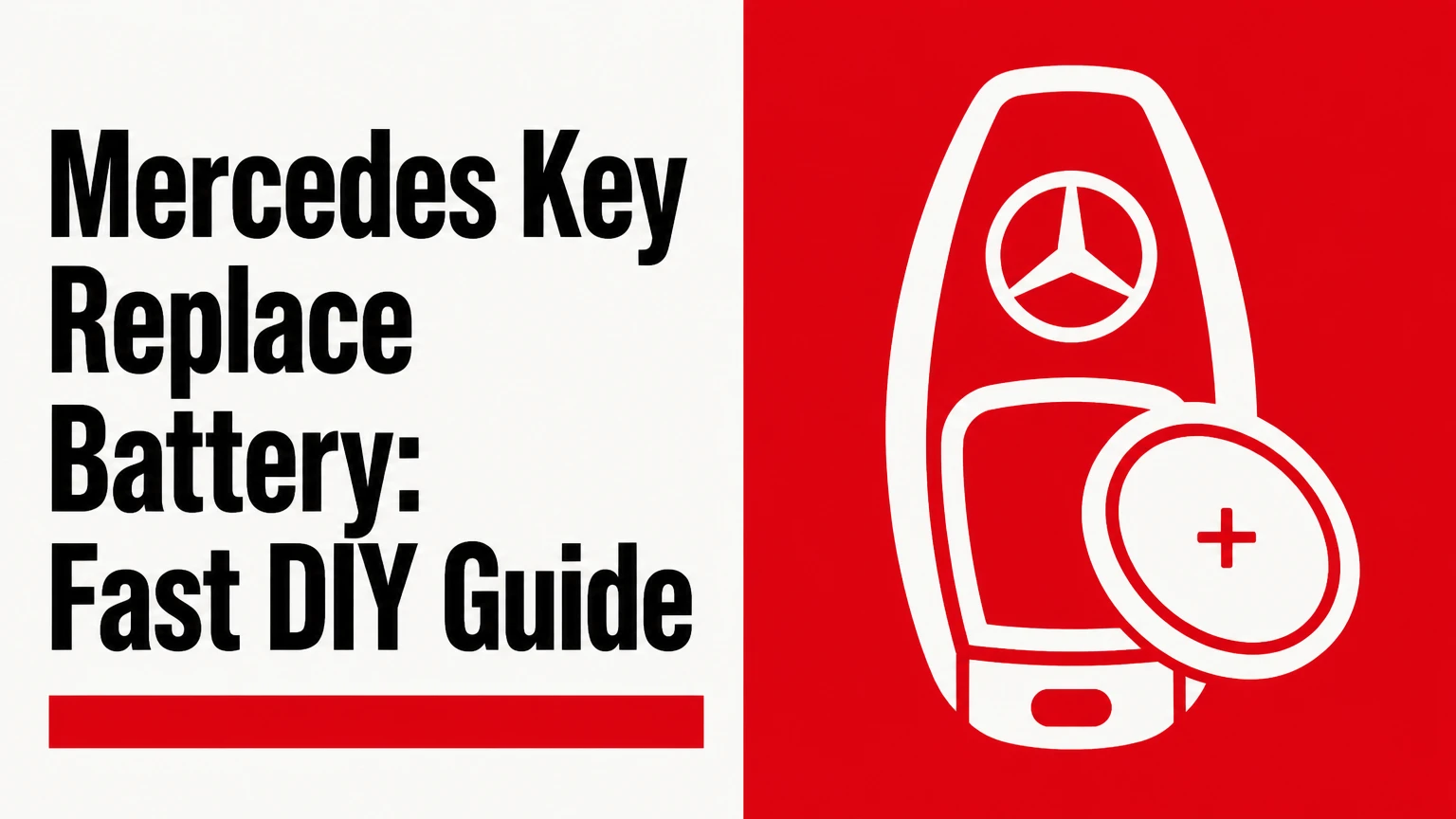
Replacing a Mercedes-Benz key fob battery usually takes 2-5 minutes and requires only the correct 3-volt coin cell. Confirm the battery marking inside the existing key before buying a CR2025 or CR2032, because Mercedes-Benz used several key shells and battery arrangements across models and production years. A battery change normally does not erase key programming.
Key Facts / At a Glance
Most Mercedes-Benz remote keys use a 3-volt CR2025 or CR2032 lithium coin cell.
The battery number printed on the old cell is more reliable than the vehicle year for identifying a replacement.
Older black SmartKey shells may use two CR2025 cells, while many chrome and newer keys use one cell.
Battery replacement normally takes 2-5 minutes and does not require pairing the key to the car.
A dead key battery may stop remote locking while the vehicle can still start through its immobilizer backup system.
A new battery will not repair a damaged circuit board, failed buttons, water intrusion, or an Electronic Ignition Switch fault.
Mercedes Key Battery Types and Compatibility
Mercedes-Benz key batteries vary by key shell, generation, market, and equipment package. The safest identification method is to remove the emergency blade, open the fob, and read the code printed on the installed cell before purchasing a replacement.
The most common cells are CR2025 and CR2032. Both provide approximately 3 volts, but a CR2032 is 0.7 millimeters thicker than a CR2025. That difference matters in a tightly fitted tray: forcing the thicker cell into a CR2025 compartment can deform contacts or prevent the housing from closing.
| Key design or identifying feature | Typical battery | Typical quantity | Identification confidence |
|---|---|---|---|
| Black SmartKey, removable gray tray | CR2025 | 2 | Confirm by opening tray |
| Early chrome key, compact rectangular shell | CR2025 | 1 or 2 | Shell revision required |
| Chrome key with triangular panic button | CR2025 | 1 | Confirm printed marking |
| Newer slim glossy or matte key | CR2032 | 1 | Confirm printed marking |
| Replacement aftermarket shell | CR2025 or CR2032 | 1 | Never infer from appearance alone |
Vehicle ranges are only approximate. A 2014 C-Class and a 2014 E-Class may have different fob designs, while a replacement shell may not match the original factory key. The battery code, tray shape, and polarity marking take priority over online year-based charts.
Is a CR2025 interchangeable with a CR2032?
A CR2025 and CR2032 are electrically similar but physically different, so they are not automatically interchangeable. The CR2025 measures about 20 millimeters in diameter and 2.5 millimeters thick; the CR2032 has the same diameter but measures 3.2 millimeters thick.
| Specification | CR2025 | CR2032 |
|---|---|---|
| Nominal voltage | 3.0 V | 3.0 V |
| Diameter | 20 mm | 20 mm |
| Thickness | 2.5 mm | 3.2 mm |
| Typical capacity range | 150-170 mAh | 200-240 mAh |
| Mercedes fitment | Many older fobs | Many newer slim fobs |
Do not substitute a CR2032 because it has higher capacity. The correct cell is the one that fits without force and matches the original marking or the Mercedes-Benz parts documentation for that key.
What You Need Before Replacing the Battery
Prepare one verified replacement coin cell, a clean work surface, and a non-metallic pick if the cover is tight. Most Mercedes-Benz fobs are designed for owner battery replacement, but the retaining clips become brittle after years of heat exposure, so force is the main avoidable risk.
| Requirement | Typical value | Why it matters |
|---|---|---|
| Replacement battery | 1 or 2 cells | Quantity depends on the tray |
| Battery voltage | 3.0 V nominal | Matches the fob circuit |
| Work time | 2-5 minutes | Includes opening and testing |
| Tool | Emergency key or plastic pick | Releases the cover without scratches |
| Optional cleaner | 70-99% isopropyl alcohol | Removes oxidation from contacts |
| Typical DIY cost | $2-$10 | Brand and local pricing vary |
Use a reputable battery from Panasonic, Sony, Energizer, Duracell, Maxell, or another established manufacturer. Check the package for intact sealing and a reasonable expiration date. Coin cells stored loose in a drawer can short against keys or coins and lose capacity.
Keep lithium coin cells away from children and pets. The U.S. Consumer Product Safety Commission warns that swallowed button batteries can cause severe internal injury in a short period; used cells should go to a battery-recycling collection point rather than household trash where local rules prohibit disposal.
How to Replace a Mercedes Key Battery
The replacement sequence is: release the mechanical key, open the correct battery compartment, match the original polarity, install the new cell without forcing contacts, close the housing, and test every function. The most important success factor is identifying the shell correctly before prying.
Step 1: Remove the Emergency Key
Slide or press the release latch on the top, rear, or side of the Mercedes-Benz key fob, then pull the mechanical emergency blade straight out. The blade usually exposes the slot needed to release the battery cover.
You will know the step worked when the metal key comes free without twisting and a narrow opening becomes visible in the fob housing. Do not insert the blade into the key ring opening or use it as a lever against the circuit board.
Common mistake: Pulling the cover before removing the blade. The blade often locks the rear cover in place, so forcing the cover can break a retaining tab.
Step 2: Open an Older Black SmartKey
Insert the tip of the emergency blade into the narrow release slot beside the blade channel. Press the internal clip while sliding the gray battery tray out of the fob.
Older black SmartKey designs commonly contain two CR2025 batteries stacked or arranged in a tray. Remove both cells, note their orientation, and install replacements with the positive sides facing the same direction as the originals, usually upward.
The checkpoint is a tray that slides completely out and returns smoothly until it clicks. If the tray stops halfway, remove it and inspect for a tilted battery rather than pushing harder.
Common mistake: Assuming every black SmartKey uses two cells. Some similar-looking shells use one battery, so count the existing cells before ordering replacements.
Step 3: Open a Chrome Key
After removing the emergency blade, use the blade tip or a plastic pick in the designated internal release slot. Separate the rear cover gradually around its seam, keeping the tool shallow so it does not touch the printed circuit board.
Chrome keys exist in several revisions. A triangular panic-button design commonly uses one CR2025, but some earlier chrome shells use a different tray arrangement. Read the marking on the cell and photograph its orientation before removing it.
The success checkpoint is a cover that separates without whitening, cracking, or bending the chrome trim. A plastic guitar pick is safer than a flat-head screwdriver because it spreads force and cannot easily bridge battery contacts.
Common mistake: Twisting the emergency blade sharply. The blade is intended to activate a release, not to pry the entire case open.
Step 4: Open a Newer Slim Key
Press the rear release button and remove the mechanical key. Press the release mechanism as specified by the shell while sliding the rear cover away from the key ring end, then lift the cover clear.
Newer slim Mercedes-Benz keys commonly use one CR2032 battery. Confirm the plus and minus markings molded into the compartment, because the visible side is not identical across every revision.
The checkpoint is a clean battery compartment with no loose springs or displaced contact tabs. Install the cell edge first if the holder uses a retaining lip, then press the opposite edge down until it sits flat.
Common mistake: Trying to pry a sliding cover upward. Sliding shells can crack when lifted because their guide rails are designed to disengage in one direction.
Step 5: Install and Test the New Cell
Hold the replacement battery by its edge, install the correct number of cells, and match the original polarity. Snap or slide the housing closed before pressing the lock, unlock, trunk, panic, or Keyless-Go functions.
A successful replacement produces an immediate response from the vehicle, although the range may not return to normal if the new cell is weak or the contacts are contaminated. Test the spare key separately if both keys were showing similar symptoms.
Common mistake: Touching the battery faces is not automatically harmful, but fingerprints can contaminate contacts. A clean, dry edge grip is preferable; never apply grease to the terminals.
Does Mercedes Key Replacement Require Programming?
A normal coin-cell replacement does not require programming because the fob’s identity and immobilizer authorization remain stored in its electronics. Programming becomes relevant when the entire key is replaced, the circuit board is damaged, or the vehicle cannot recognize an otherwise functional key.
| Situation | Battery replacement needed | Programming typically needed | Likely next action |
|---|---|---|---|
| Remote range gradually decreased | Yes | No | Install verified cell |
| Buttons stopped after storage | Usually | No | Replace and inspect contacts |
| New aftermarket key shell only | No, unless cell is weak | No | Transfer original electronics |
| Entire new key purchased | No | Yes | Mercedes dealer or qualified locksmith |
| Key remains dead after two fresh cells | Uncertain | Not first diagnosis | Inspect PCB and switches |
| “Key Not Detected” with working buttons | Maybe | Usually no | Test backup reader and vehicle system |
A battery cannot create a new authorization code. Dealers and automotive locksmiths use vehicle-specific equipment to supply and register a replacement key, which is a different service from changing a coin cell.
Can You Start a Mercedes With a Dead Key Battery?
Many Mercedes-Benz vehicles can start with a dead remote battery because the immobilizer transponder and the remote transmitter are separate functions. The emergency starting method varies by model: some cars use an ignition-slot reader, while Keyless-Go vehicles use a designated backup area in the center console or another marked location.
Place the key in the vehicle’s documented backup reader, then press the brake and use the start control, or insert the key into the ignition slot if the vehicle has one. The mechanical blade can unlock a door, but it does not itself authorize the engine to start.
A dead fob battery can therefore cause two different symptoms. The remote buttons may fail while the engine still starts, or a vehicle with a separate EIS, antenna, or immobilizer fault may reject the key even after a battery change.
Consult the owner’s manual for the exact backup pocket. Locations differ across the A-Class, C-Class, E-Class, GLC, GLE, S-Class, and other Mercedes-Benz platforms.
Which Replacement Option Is Best?
DIY replacement is the best choice for a physically intact key with a known battery type. An automotive locksmith is the better choice when the key has damaged clips, water exposure, broken buttons, or persistent failure after a verified battery installation.
| Replacement option | Typical time | Typical cost, USD | Best use case | Main limitation |
|---|---|---|---|---|
| DIY battery change | 2-5 min | $2-$10 | Intact fob, known cell | User may damage clips |
| Independent locksmith | 10-30 min | $10-$30 | Battery plus diagnosis | Availability varies |
| Mercedes-Benz dealer | 15-45 min | $20-$60 | OEM service preference | Higher labor charge |
| Full replacement key | 1-7 days | $200-$800+ | Lost or damaged key | Coding and security checks |
| Shell-only repair | 15-45 min | $20-$80 | Broken housing, working PCB | Electronics must transfer |
These are typical consumer ranges, not fixed prices. Dealer labor rates, country, model, battery availability, and whether a diagnostic scan is added can change the invoice substantially. A dealership visit for a simple coin cell is rarely necessary unless the key is still under a service agreement or the fob has a deeper fault.
Why Does the Key Not Work After Battery Replacement?
A Mercedes-Benz key that remains unresponsive after a battery change usually has one of five causes: incorrect cell type, reversed polarity, weak or counterfeit battery, poor contact pressure, or damage unrelated to the battery. Check the simple mechanical causes before assuming that programming failed.
Work through this sequence:
- Remove the battery and compare its code with the old cell.
- Confirm the positive side matches the compartment marking.
- Try a second new cell from a sealed, reputable package.
- Inspect the spring contacts for flattening, corrosion, or a shifted position.
- Clean light oxidation with a small amount of isopropyl alcohol and let it dry.
- Test the fob close to the vehicle, away from a phone, wireless charger, or metal case.
- Use the backup starting procedure from the owner’s manual.
- Test the spare key to separate a vehicle fault from a single-fob fault.
| Symptom after installation | Most likely cause | Corrective action |
|---|---|---|
| No buttons work | Reversed, flat, or wrong cell | Recheck code and polarity |
| Lock works only nearby | Weak cell or damaged antenna | Try premium cell, inspect PCB |
| LED absent, if fitted | No electrical contact | Inspect tabs and battery seating |
| Key works intermittently | Loose contact or cracked solder joint | Professional inspection |
| Car says key not detected | Backup antenna or vehicle issue | Try documented backup pocket |
| Housing will not close | Wrong thickness or tilted cell | Use specified battery only |
A replacement battery does not normally require “re-syncing.” Some remote systems may need a vehicle-specific initialization procedure after prolonged disconnection, but the procedure is not universal across Mercedes-Benz generations. Do not follow a generic internet sequence that instructs repeated ignition cycling unless it matches the exact vehicle manual.
When Will a New Battery Not Fix the Key?
A new battery will not fix a Mercedes-Benz fob with liquid damage, fractured solder joints, failed microswitches, a broken antenna, severe corrosion, or a locked-out electronic module. A fob that was washed in clothing or submerged should be opened and assessed quickly because corrosion can continue after the exterior dries.
Press each button and compare its tactile feel. A soft, collapsed, or permanently pressed button indicates a switch or housing problem rather than low voltage. Examine the circuit board under bright light, but do not scrape components or use household contact sprays.
Professional diagnosis is justified when the fob fails with two verified cells, the vehicle rejects both keys, the key was wet, or the emergency starting method also fails. An automotive locksmith can test transmitter output and key electronics; a Mercedes-Benz workshop can scan vehicle-side systems such as antenna modules, Keyless-Go control units, and the EIS.
What if the key casing is broken?
If the electronics and buttons still work, a shell-only replacement may restore physical protection without replacing or programming the key. Transfer the original circuit board, transponder components, rubber button membrane, and battery contacts into a compatible shell.
Aftermarket shells vary in alignment and plastic quality. Compare the blade channel, button layout, PCB shape, and battery holder before buying; a shell for a visually similar key may not accept the original board.
How Long Should a Mercedes Key Battery Last?
A Mercedes-Benz key battery commonly lasts 1-3 years, but usage, temperature, passive Keyless-Go polling, storage conditions, and battery quality change the interval. Preventive replacement is sensible when range declines or the vehicle displays a low-key-battery warning, rather than following an inflexible two-year schedule.
A fob kept beside a vehicle with passive entry may communicate more often than one stored across a house. Extreme heat accelerates battery aging, while cold temporarily reduces available output. Keep the spare key away from the car when it is not needed.
Replace both key batteries separately when symptoms appear. Replacing a working cell on a fixed calendar wastes capacity, but waiting until a long trip can leave the owner without convenient remote access.
Mercedes Key Battery FAQ
Can I use any brand of CR2032 in a Mercedes key?
You can use a reputable CR2032 brand if the fob specifically requires CR2032 and the cell has a nominal 3.0-volt rating. Brand name does not override fitment: a correctly sized, fresh Panasonic, Sony, Energizer, Duracell, or Maxell cell is preferable to an old or poorly stored unbranded battery.
Will removing the battery erase my Mercedes key?
Removing the coin cell normally does not erase the Mercedes-Benz key’s coding because authorization data is stored in non-volatile electronics. A key that stops working after replacement usually has a polarity, contact, battery-quality, circuit-board, or vehicle-side problem rather than lost programming.
Why does my Mercedes say Key Battery Low?
The warning means the vehicle detects weak output from the remote key battery or receives a low-voltage signal. Replace the specified cell, verify its seating, and test the key close to the vehicle. If the warning returns immediately with a premium new battery, inspect contacts and the fob circuit.
Can I replace the Mercedes key battery without the emergency key?
Some shells can be opened with a plastic pick, but the emergency blade is usually the intended release tool and reduces damage risk. If the blade is missing, use a model-specific plastic opening tool or have a locksmith open the fob rather than forcing the seam with metal.
How do I dispose of the old coin cell?
Cover the terminals with non-conductive tape, keep the cell away from children and loose metal objects, and take it to a battery-recycling collection point. Local disposal rules differ, and lithium coin cells should not be burned, crushed, or placed loose in household recycling.
The Bottom Line
The safest Mercedes key replace battery procedure is to identify the existing cell, remove the emergency blade, open the shell according to its design, install the same CR2025 or CR2032 type with correct polarity, and test the remote plus the vehicle’s backup-start method. DIY replacement is inexpensive and quick for an intact fob; persistent failure requires contact, electronics, or vehicle-system diagnosis rather than repeated battery changes.